
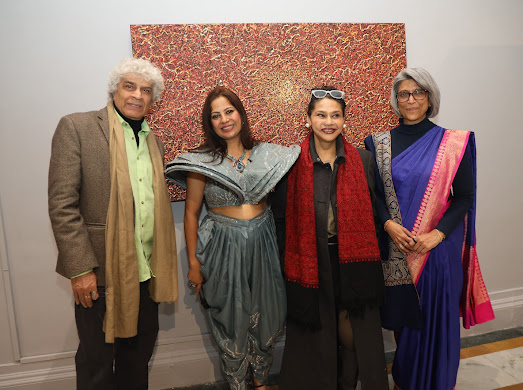
Listening to the Fourth: Sonika Agarwal’s Quiet Journey into Consciousness
In a contemporary art world often driven by visibility, scale, and spectacle, Sonika Agarwal has built a practice rooted in stillness. Her journey as an artist is not marked by haste, but by sustained inward inquiry—one that mirrors the very themes of her solo exhibition What Remains Awake: Dream, Depth, and the Fourth, currently on view at Kalamkar Gallery, Bikaner House, New Delhi (30 January–10 February 2026).
A self-taught artist with over seventeen years of practice, Agarwal’s path has unfolded alongside the multiple roles women often inhabit—artist, seeker, professional, and individual navigating expectation and autonomy. Rather than separating lived experience from artistic practice, she allows them to quietly inform one another. Her work draws deeply from the ancient Indic understanding of consciousness—Jagrat (waking), Swapna (dream), Sushupti (deep sleep), and Turiya, the fourth state beyond thought—offering a language that feels both philosophical and deeply personal.
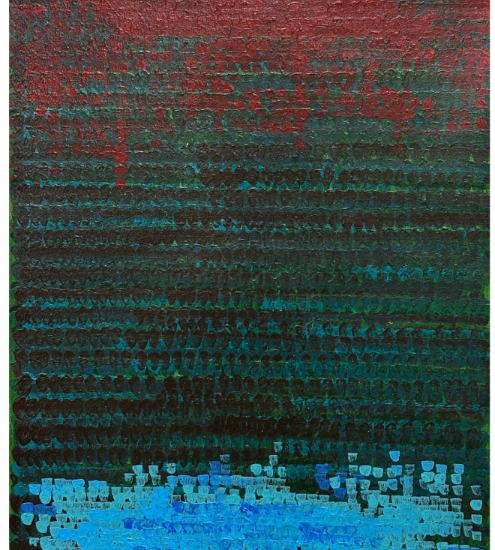
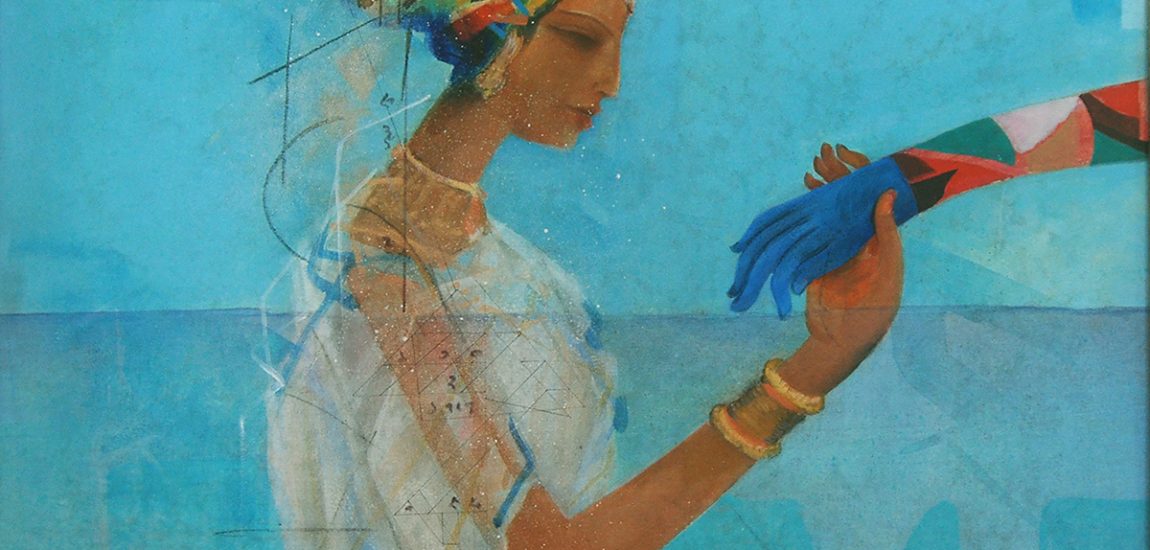
Unlike narrative-driven or figurative expressions commonly associated with women’s storytelling, Agarwal chooses abstraction as her mode of resistance and reflection. Her paintings, sculptures, and installations do not explain; they invite. Colour shifts, surfaces breathe, and forms hover between presence and absence—echoing the emotional labour, resilience, and inner worlds women often carry invisibly.
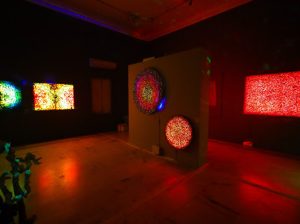
Curated under the guidance of Myna Mukherjee, the exhibition positions Agarwal’s work within a larger discourse on perception and non-Western epistemologies. Sculptural works such as Vasana: The Architecture of Desire examine how latent impressions—longing, memory, ambition—take shape within the psyche, while Dominance over the Silence of Ahimsa reflects on power, vulnerability, and ethical responsibility through a tense predator–prey dynamic. These are not declarative feminist statements, but meditative reflections on agency, restraint, and choice.
Agarwal’s journey has been shaped by persistence rather than institutional grooming. Her recognition, including the prestigious National Stree Shakti Award conferred by the President of India, acknowledges not only artistic excellence but also her contribution as a woman shaping cultural thought through quiet rigor. The recent acquisition of her works by the Museum of Sacred Arts (MoSA), Belgium, further signals the global resonance of a practice grounded in introspection.
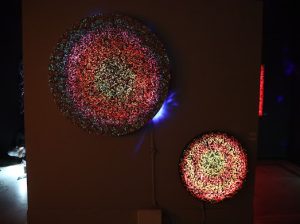
What Remains Awake ultimately reflects a deeply feminine strength—one that listens more than it announces, observes more than it demands. In asking viewers to slow down and encounter states of awareness beyond productivity and performance, Sonika Agarwal opens a contemplative space that feels especially urgent today. It is a reminder that for many women, the most radical act remains the courage to remain awake—within, despite the noise outside.


Leave a Reply