
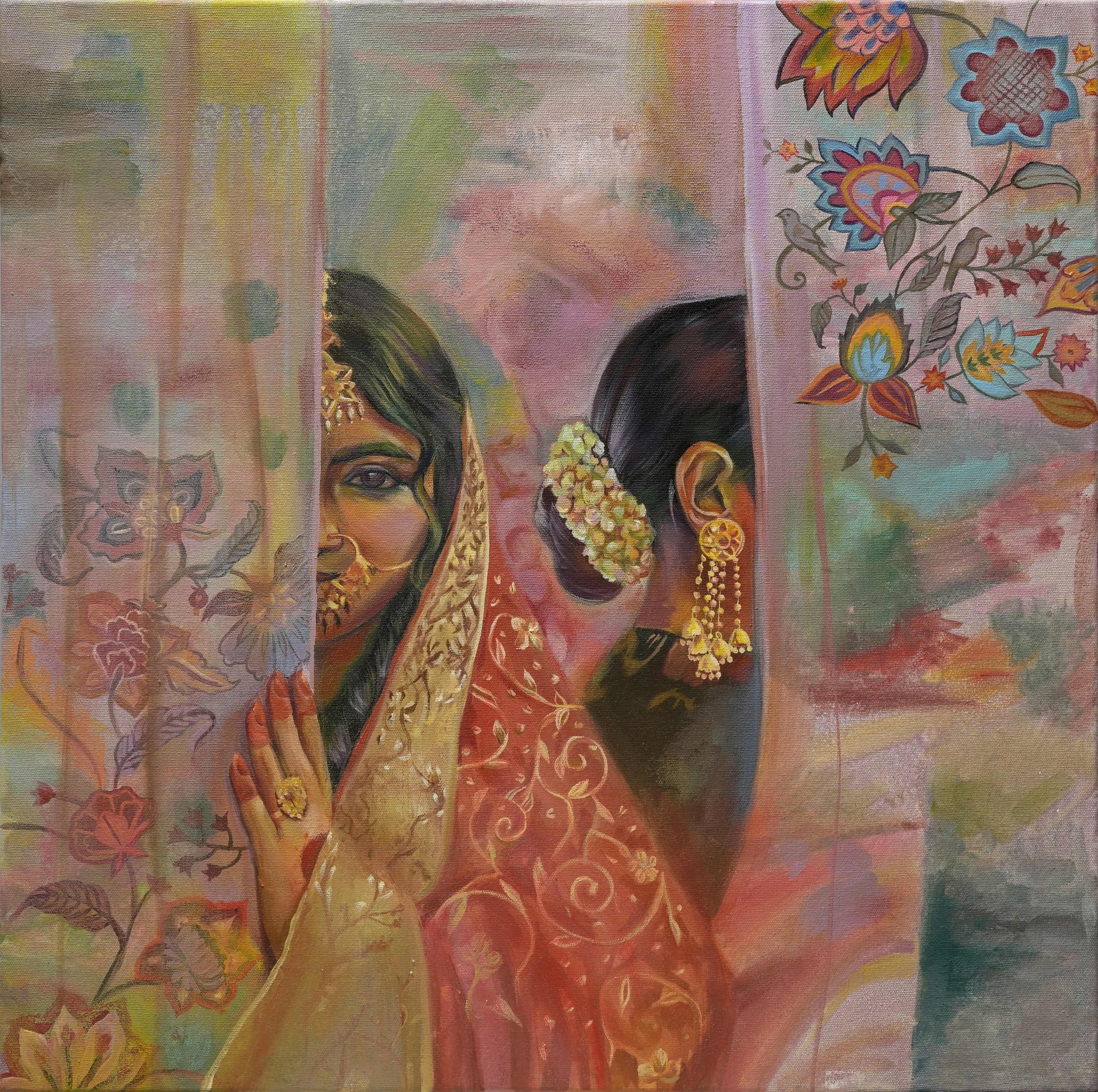
When India Became Home Brings Julia Usmanova’s Cross Cultural Vision to Bikaner House
Russian artist Julia Usmanova explores memory, identity, feminine expression, and belonging through evocative figurative paintings shaped by her life in India.
11 June 2026 , New Delhi
Russian artist Julia Usmanova’s solo exhibition When India Became Home explores memory, identity, and belonging through evocative figurative paintings inspired by her life in India. Presented at the Main Gallery, Bikaner House, the exhibition reflects the artist’s emotional and cultural engagement with Delhi and Kolkata, weaving together feminine forms, landscapes, and lived experiences. On view from 18–23 June, 11 AM–7 PM, the show offers an intimate cross-cultural dialogue through contemporary art.
When India Became Home
Solo Exhibition by Russian Artist Julia Usmanova
Dates: 18 June – 23 June 2026
Venue: Main Gallery, Bikaner House, Pandara Road, New Delhi
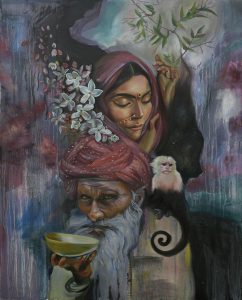

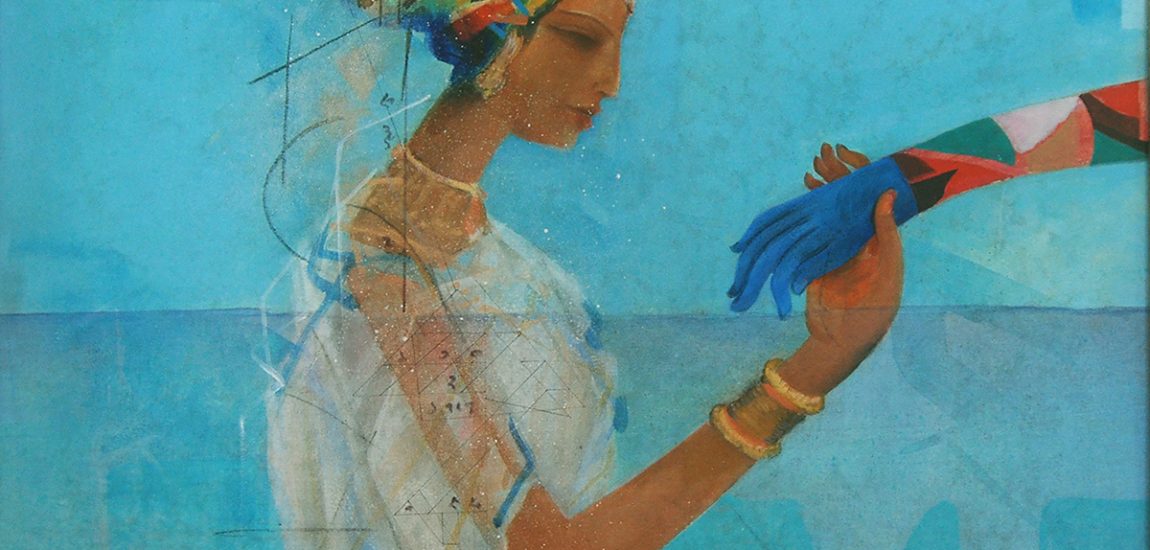
Russian artist Julia Usmanova shows how artists living away from their homeland can create meaningful work by deeply connecting with the culture of the place they now call home. Having lived in Kolkata for many years, she captures the spirit, culture, and atmosphere of India through her paintings. Her latest series, Bilateral Layerings, presents a collection of works centered around the image of the young Indian woman. Through these figures, Julia expresses her own understanding and experience of “Indianness.”
The women in her paintings have distinctly Indian features, clothing, gestures, and expressions. At the same time, they also reflect the artist’s personal emotions and memories. In many works, jasmine flowers surround the female figure, while a cup of wine — inspired by the Persian Rubaiyat — symbolizes the importance of enjoying simple moments in life. This quiet and reflective mood can also be seen in paintings such as Solitude and Midday and Midnight. Even details like hairstyles help show that the differences between Russian and Indian identity are only external, while human emotions remain universal.
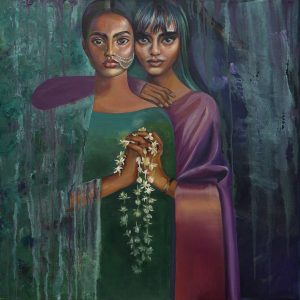
As an artist deeply interested in the female form, ornamentation and jewellery naturally become important elements in her work. Earrings, decorative details, and traditional adornments are used not only for beauty, but also to explore Indian identity through her own artistic vision.
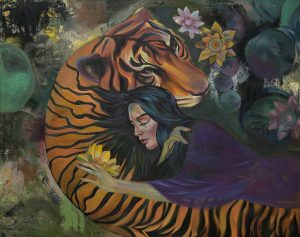
Julia’s paintings also move beyond everyday reality and enter a dreamlike emotional world. In one striking work, a tiger gently surrounds the female figure, creating a powerful symbolic image. The tiger connects both Russia and India through the Siberian tiger and the Royal Bengal tiger, reflecting the artist’s personal journey between the two cultures. These dream-like images express deeper emotions and psychological experiences.
Birds and dragonflies also appear often in her paintings, resting peacefully around the women. These symbols represent freedom, hope, spirituality, and emotional connection. Through them, the artist creates a bridge between the material world and the inner emotional world.
At the heart of Julia Usmanova’s art is the idea that emotions, memories, and human connections are stronger than cultural boundaries. Her experiences in both Russia and India shape her work, creating a beautiful dialogue between people, cultures, nature, and shared human feelings. Her paintings offer a glimpse into an artistic journey that continues to grow and evolve.



Leave a Reply